
Söhne Der Witwe
Origins & Context
When I returned to the studio in early June 2020, my circumstances were radically different from those surrounding the recording of Das verlorene Wort in Glaube, Liebe, Hoffnung. Hoffnung! only seven months earlier.
In October 2019, I had reached one of the most uncertain points of my professional life. My remaining capital was disappearing, my independent career had not yet become financially sustainable, and I genuinely did not know how I would support myself and my family if nothing changed.
Then, within a remarkably short period, things began to move.
A new advisory mandate arrived almost immediately after the October recording. At the same time, the distribution business I had been developing began to generate substantially stronger sales. By the end of 2019, for the first time since becoming independent, I was able to pay my expenses from income I had generated myself rather than from the capital I had set aside to finance the transition from banking into self-employment.
That moment was psychologically important.
I had left an established banking career in 2017 without knowing precisely what my professional life would eventually become. For almost three years, I had been experimenting, building, adapting and financing that search largely from my own resources. By the beginning of 2020, I began to feel for the first time that I had found a way forward.
The development accelerated rapidly.
A new distribution agreement allowed me to professionalise the Swiss business. Substantial investment in online marketing produced an immediate response, and sales increased dramatically. What had begun as a small operation — at first involving products stored and packed by myself — developed into a more professional structure with external warehousing and logistics.
Despite that growth, I deliberately retained a highly personal relationship with customers. My background in private banking had taught me the importance of individual communication. Orders were acknowledged personally, questions were answered directly, and customers knew that there was a real person behind the business.
This combination of digital marketing and personal service proved remarkably effective.
The timing was extraordinary. The rapid shift towards online commerce during the first months of the Covid-19 pandemic accelerated a development that had already begun. By the spring of 2020, the business was operating at a level I could hardly have imagined only a few months earlier.
Other professional opportunities developed in parallel. I joined the board of a Swiss technology company involved in the development and commercialisation of a secure communication application. I also remained involved in other advisory and entrepreneurial projects.
For a period, I worked extraordinarily long hours. Yet after the uncertainty of the preceding years, the intensity felt very different. I was no longer working simply in the hope that something might eventually succeed.
Something was succeeding.
For the first time since leaving banking, I felt that I had proved to myself that I could build an independent professional existence.
But while one part of my life was becoming more stable, another was moving in the opposite direction.
During the spring of 2020, tensions within my marriage had intensified considerably. By May, I had reached the conclusion that I could no longer continue in the relationship. I decided that I would separate and find a new home.
The decision was necessary, but it was not easy. Professional confidence and private upheaval therefore existed simultaneously.
This was the situation in which I returned to the studio in early June 2020.
The contrast with October 2019 could hardly have been greater. Seven months earlier, I had sat at the piano without knowing whether my professional independence would survive. Now I had experienced an extraordinary period of growth and had acquired a new confidence in my ability to create something of my own.
At the same time, the structure of my private life was beginning to break apart.
As with the other recordings, Söhne der Witwe should not be understood as a musical representation of these events. Preludes III and IV do not encode particular people or episodes, and I did not enter the studio with a programme that I intended to translate into music.
They belong instead to the inner landscape of that particular moment.
Looking back, what distinguishes the recording is perhaps the coexistence of two apparently contradictory movements: the experience of having found new professional strength, and the recognition that another part of my life had reached its end.
I had not arrived at stability.
But I was no longer standing where I had stood in October 2019.
Something fundamental had changed.
The Title & Artwork
The title Söhne der Witwe — Sons of the Widow — did not emerge from a predetermined concept.
As with much of my music, the title came later. I listened to what I had recorded and chose words that intuitively seemed to belong to it. I do not regard the title as a key with which the music can be decoded. It is closer to a reflection of the emotional world in which the recording existed.
The recording was made during the first year of the Covid-19 pandemic. At that time, the normal life of my Masonic lodge had effectively come to a halt.
I was serving as Deputy Master of the lodge. We could no longer meet as we normally did, and the ritual and social life that had brought the brethren together was interrupted.
We therefore began meeting online at the same time on Wednesday evenings when we would ordinarily have gathered in person. Whoever wished to join could do so.
These meetings gradually became something more than an organisational substitute for lodge meetings. We talked about what was happening in our lives, how we were experiencing the pandemic and how we were coping with an extraordinary period of isolation and uncertainty.
In some ways, they became a form of mutual support.
The expression Sons of the Widow belongs to my Masonic world. In choosing it for this recording, however, I was not attempting to communicate a particular ritual meaning. It simply felt appropriate to me at a time when the brethren were separated from one another and yet trying to preserve their connection.
There was also another, much more private emotional landscape surrounding the recording. While my professional life had developed with extraordinary speed during the preceding months, my marriage was approaching its end.
Music has always given me a space in which emotions can exist without having to be explained. Improvisation, in particular, allows me to express things that I would often contain or control in ordinary life.
That is especially true of Prelude IV.
I remember the recording session very clearly. I had finished Prelude III and told the sound engineer that I needed a short break. I went to the bathroom, returned to the studio, sat down at the piano and immediately began to play again.
There was no discussion of what should come next. There was no compositional plan and no preparation.
Prelude IV simply emerged.
For that reason, it remains one of the recordings to which I feel most closely connected. To me, it is profoundly sad, but its significance lies less in what it might be said to represent than in the immediacy with which it came into existence.
The artwork was chosen in much the same way.
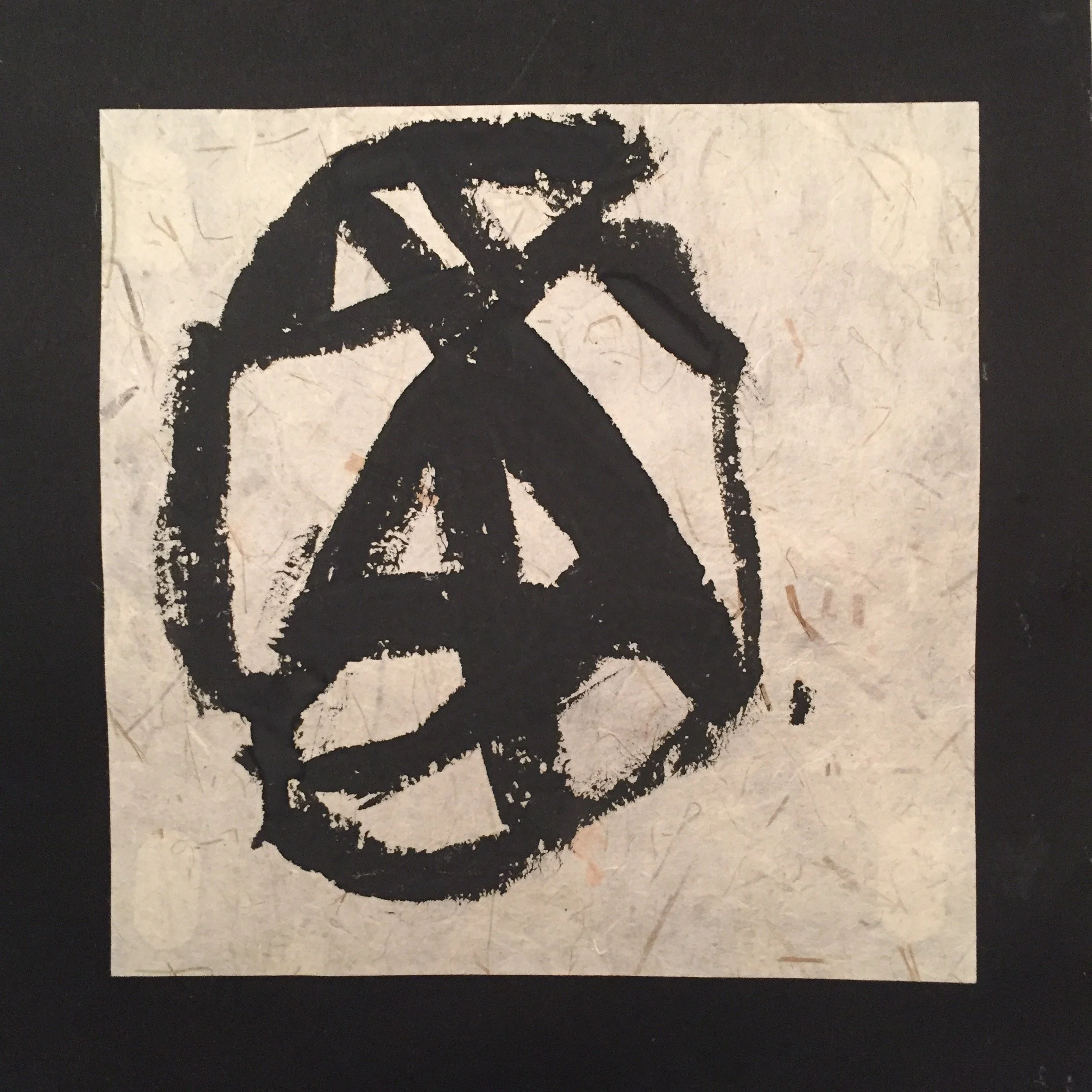
It is a painting by my younger daughter, Amelie Sophie, created when she was approximately five years old. She did not make it for the album. Years later, when I was looking for an image for Söhne der Witwe, its stark black-and-white forms seemed instinctively right for the music.
Neither the painting nor the title explains the improvisations.
They belong together because, to me, they share something of the same emotional world.
Préludium III — Musical Analysis
Prelude III is an extended piano improvisation of approximately eighteen minutes and fifty-two seconds. Its large-scale form is characterised less by a single continuous trajectory than by a succession of contrasting episodes in which tension repeatedly emerges, recedes and returns in altered form.
The opening establishes this principle immediately. The music enters with considerable presence, but does not maintain that level of intensity. Instead, the initial gestures are followed by an early withdrawal. This alternation between assertion and retreat becomes one of the defining characteristics of the improvisation.
Rather than progressing towards a single predetermined destination, the music seems to develop through successive waves. Periods of greater harmonic and rhythmic activity are repeatedly interrupted by more spacious passages in which individual gestures are given room to resonate.
Harmonically, the language is notably fluid. Several pitch centres compete for prominence rather than allowing a single tonal centre to dominate the entire work. G is an important recurring point of reference, but the harmonic field also gives considerable weight to neighbouring and more chromatically coloured regions.
This contributes to a sense of continuous harmonic mobility. Tonal orientation is repeatedly established, questioned and replaced. More consonant passages coexist with considerably denser harmonic regions, and the movement between them becomes an important source of musical tension.
The middle sections continue this process without producing a conventional central climax. Instead, intensity appears in several distinct waves. A forceful passage may be followed by a substantial reduction in dynamic weight, only for the music to gather momentum again later.
The resulting structure is therefore fundamentally episodic.
Silence and resonance also play an important role. In the quieter passages, the space following a gesture becomes part of the musical argument. The piano is allowed to decay naturally before the next idea emerges. These moments prevent the extended duration from becoming continuously saturated and create pronounced contrasts with the denser sections.
Rhythmically, the improvisation contains passages with a strong sense of propulsion, but no single pulse governs the entire work. Rhythmic activity expands and contracts together with harmonic and dynamic density. At some moments the music appears almost contemplative; at others it acquires a considerably more urgent physical momentum.
One of the most striking features occurs in the final part of the work.
After an extended period in which the music repeatedly reduces its energy, the improvisation does not simply disappear into silence. During the closing minutes, activity begins to return. The gestures acquire greater weight and the dynamic level rises.
The final passage is substantially more assertive than much of the preceding quieter material. Rather than ending through gradual dissolution, Prelude III gathers itself once more.
This gives the conclusion a particular structural significance. The work does not resolve its earlier contrasts by eliminating them. Instead, it ends by recovering energy.
The overall architecture might therefore be described not as a simple arch, but as a sequence of recurring cycles:
assertion — withdrawal — renewed activity — retreat — resurgence.
This distinguishes Prelude III from the preceding works. Wohlauf Würdige Brüder, Schreitet Voran ultimately developed towards a strongly forward-directed conclusion, while Das verlorene Wort in Glaube, Liebe, Hoffnung. Hoffnung! formed a much broader process of accumulation followed by gradual withdrawal.
Prelude III behaves differently. Its musical identity lies in recurrence: energy is repeatedly generated, relinquished and rediscovered.
The result is an improvisation whose form emerges through persistence rather than linear progression. Musical ideas do not simply lead from one state to another. They return, transform and reassert themselves until the final gestures bring the work to a close with renewed presence.
Prelude IV — Musical Analysis
Prelude IV is an extended piano improvisation of approximately seventeen minutes and forty-six seconds. Among its most immediately striking characteristics is the physicality of its musical language. Rhythm, repetition and strongly articulated movement play a particularly prominent role, giving substantial portions of the work a pronounced sense of momentum.
The opening begins cautiously. Individual gestures emerge from a relatively restrained dynamic field before the music rapidly acquires greater energy. Already within the first minutes, the contrast between sparse, reflective material and more forceful rhythmic movement establishes one of the fundamental principles of the improvisation.
Unlike a work constructed around a single gradual crescendo, Prelude IV develops through repeated transformations of energy. Active passages accumulate momentum and are then interrupted or substantially reduced. New movements subsequently emerge from these quieter regions.
Repetition plays an important structural role. Short figures and recurring patterns generate forward motion without becoming fixed themes in the conventional sense. At times, the piano writing acquires an almost ostinato-like quality: musical energy is created through persistence, rhythmic insistence and the physical repetition of gestures.
This gives the improvisation a strongly kinetic character.
Harmonically, the music remains mobile. Tonal reference points repeatedly emerge, but they are rarely allowed to establish complete stability for long periods. More consonant and recognisably diatonic passages coexist with denser harmonic regions, producing a continual movement between orientation and instability.
During the middle portion of the work, rhythmic and dynamic intensity becomes increasingly important. The piano writing grows more expansive and forceful, with repeated figures creating substantial momentum. Yet this accumulation does not lead directly to the conclusion.
Instead, one of the most striking structural events occurs around the later middle section, when the accumulated energy suddenly recedes.
The texture becomes markedly quieter and more spacious. After the physical intensity of the preceding passages, this reduction creates a strong sense of interruption. The music appears temporarily stripped of much of its earlier momentum.
But this is not the end of the process.
From this reduced state, movement gradually returns. Rhythmic activity is rebuilt and the dynamic range expands once again. The final third therefore functions not as a prolonged withdrawal, but as a reconstruction of energy.
As the conclusion approaches, the piano regains considerable force. Repeated figures and strongly articulated gestures create renewed momentum, and the final minutes possess a substantially greater physical presence than the quiet region from which they emerged.
The work therefore resists a simple trajectory from tension towards resolution. Its larger architecture is better understood as a process of repeated activation:
emergence — acceleration — interruption — rebuilding — renewed momentum.
This distinguishes Prelude IV both from the broad arch of Das verlorene Wort in Glaube, Liebe, Hoffnung. Hoffnung! and from the more episodic cycles of Prelude III.
Although Preludes III and IV share an improvisatory language based on contrast, Prelude IV places particular emphasis on rhythm and physical movement. Its repeated patterns create a sense that the music is not merely progressing through harmonic states but is being propelled through them.
Silence and reduced texture consequently acquire an important counterweight. The quieter passages do not simply provide rest; they make the subsequent return of movement more consequential.
The ending is therefore significant not because it resolves all preceding tension, but because the music has recovered its capacity for motion.
The result is an improvisation of pronounced contrasts: reflective and physical, spacious and insistent, restrained and forceful. Its coherence does not arise from a predetermined formal plan, but from the repeated loss and recovery of momentum across its extended duration.