
Durch Feuer Wird Die Reine Natur Erneuert
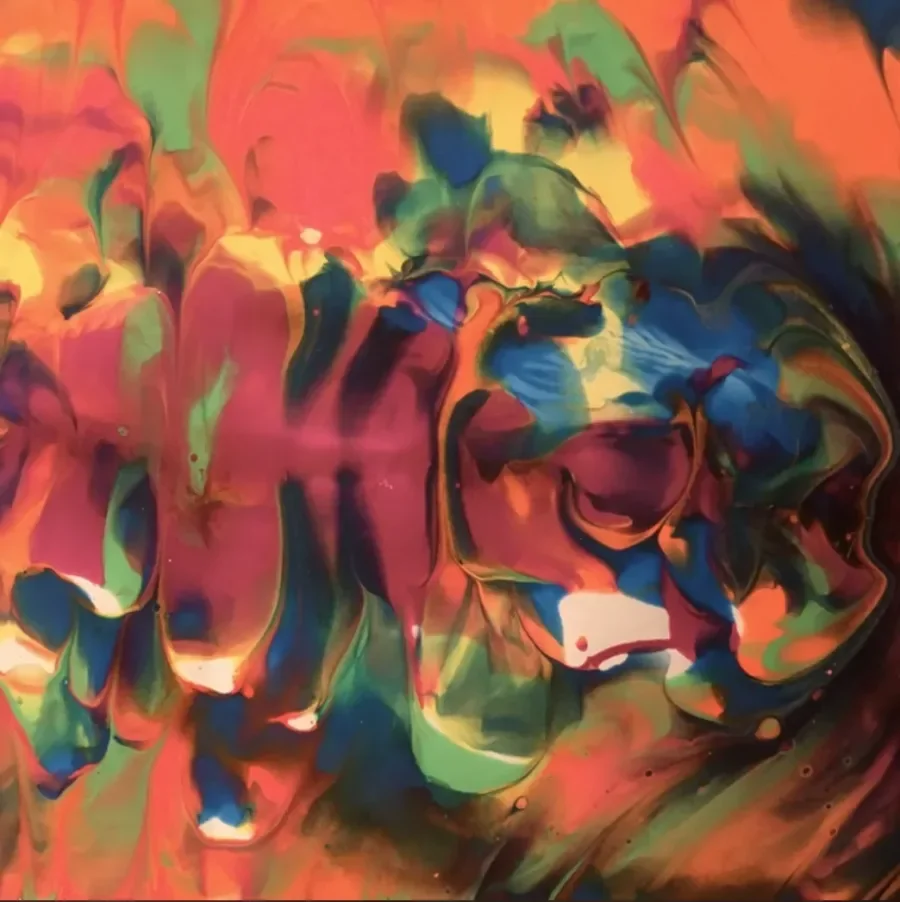
Origins & Context
Durch Feuer wird die reine Natur erneuert
30 March 2023
Almost twenty-one months separate Die Reisen des Gesellen, recorded in July 2021, from Durch Feuer wird die reine Natur erneuert.
During those twenty-one months, stability repeatedly appeared, disappeared and had to be rebuilt.
When I recorded Die Reisen des Gesellen, I believed that a particularly difficult journey was approaching its end. I had returned to salaried employment after the sudden loss of my distribution business. My daughters were living with me, and I was in a relationship that had brought affection, companionship and emotional support into my life.
For a while, I felt that I had arrived somewhere.
Only a few months later, that sense of stability was disrupted again.
Another Professional Beginning
In September 2021, I went to the office one Friday morning and was told that my position was being eliminated. The company was concentrating more of its personnel outside Switzerland, where operating costs were lower.
For me, the consequences were immediate.
I had not yet been in salaried employment long enough to qualify for unemployment benefits. Only a few months after losing my distribution business, I therefore found myself confronting essentially the same question again: how could I maintain a home and provide stability for my daughters without knowing where the next reliable income would come from?
Once again, I began looking for a way forward.
One of the people I approached was a long-standing personal acquaintance whom I had known for approximately twenty-five years. We had originally met through a mutual friend, but despite knowing each other for so long, we had never worked together professionally.
That was now about to change.
He offered me the possibility of working across several organisations with which he was involved. Part of my work concerned the regulatory development of a Swiss asset management company. Another part involved a family office and regulatory work connected with its activities. I also became involved with a foundation concerned with refugee issues and social innovation.
Through this work, I encountered an unexpectedly broad range of projects and became involved in evaluating innovative approaches to social and humanitarian challenges.
Professionally, it was a very different world from the one I had expected to enter only a few months earlier.
But it gave me something particularly important: continuity.
Stability, Once Again
After approximately a year, this employment came to its planned conclusion.
This time, however, my situation was fundamentally different from the previous year. I had now accumulated sufficient salaried employment to qualify for unemployment protection.
I still remember going to the unemployment office almost cheerfully.
After several years in which losing an income could immediately become an existential problem, the simple knowledge that a social safety net now existed felt almost like an achievement in itself.
In the event, I hardly needed it.
Through a headhunter, I was offered another position in the Swiss asset management industry. I joined a Zurich-based asset management company as Chief Operating Officer and Deputy CEO.
The company was entering a period of reorganisation involving new ownership and management arrangements. These changes required regulatory approval, and my own position formed part of the management structure submitted for regulatory assessment.
It was another beginning.
And, as so often during those years, I entered it with considerable enthusiasm.
Family and Continuity
At the same time, life at home continued to demand much of me.
The separation had also required both of my daughters to adapt to a very different family life. During those years, providing them with as much continuity and stability as possible remained one of my central responsibilities while my own professional circumstances kept changing.
Gradually, however, both began to find their own ways forward.
My mother and stepfather also supported us during this period. Their help, including support with my elder daughter’s education, relieved some of the financial pressure that had accompanied me for years.
My stepfather had by then been part of my life for more than three decades.
He was not simply my mother’s partner. For my daughters, he had effectively assumed the role of a grandfather. He had been present throughout their childhood and had become part of the structure of our family.
His health was deteriorating, and we knew that his life was approaching its end.
Knowing this did not make what eventually happened easier.
A Relationship
The relationship that had begun in 2021 also continued through these years.
She had become an important person in my life. We spoke almost every day, travelled together and shared an unusual degree of openness. She had supported me during professional uncertainty and had accompanied me through important personal moments.
She also knew my family and cared about my stepfather.
At the same time, I had gradually begun to recognise something difficult: the affection, gratitude and closeness I felt towards her were not necessarily the same as being in love.
That did not diminish what she had given me.
She had been there.
And during some of the most uncertain periods of my life, that mattered enormously.
March 2023
By March 2023, another professional milestone was approaching.
The asset management company in which I was serving as COO and Deputy CEO was awaiting regulatory approval for its reorganisation.
On 22 March, that approval arrived.
For me, it was a significant moment. After years of repeated professional beginnings and interruptions, I was once again formally established in a senior management position within the Swiss financial industry.
I felt optimistic.
A few days later, I arranged another recording session with my sound engineer for the evening of 30 March.
My state of mind when I made the appointment is important.
I was enthusiastic. Spring had arrived. An important professional step had been completed, and I approached the recording with thoughts of renewal, joy and love.
I intended to improvise from that emotional landscape.
Then, shortly before I was due to leave for the studio, my mother telephoned.
Her partner had died.
The Telephone Call
He had been my stepfather for more than three decades.
His death was not entirely unexpected. His health had been deteriorating for some time.
But expectation and reality are different things.
I was standing on the threshold of leaving for a recording session when my mother told me that he was gone.
For a moment, the circumstances in which the session had been arranged no longer existed.
I nevertheless decided to go.
At the time, I felt certain that he himself would not have wanted me to cancel the recording because of his death.
So I went to the studio.
The Recording
What happened at the piano was therefore very different from what I had imagined when I arranged the session.
The recording had originally been conceived in the spirit of spring, optimism, joy and love.
Death intervened before I reached the studio.
Less than two weeks later, when I wrote publicly about the recording, I described the transformation very simply:
The joy of spring had given way to mourning. Love remained.
I also described the resulting improvisation as moving, for me, through three broad ideas: death, a tender and mourning love for the person who had died, and release from suffering through fire.
These were not themes I had prepared in advance.
They were how I understood the music after it had emerged.
That distinction is important throughout Ordo ab Chao. I do not sit down at the piano with a programme that I then translate into sound.
The music comes first.
Meaning follows.
On 30 March 2023, however, life intervened with extraordinary immediacy between the decision to record and the act of recording.
There had been almost no time to process what had happened.
There had been a professional milestone.
There had been spring and optimism.
Then there was a telephone call.
And then there was the piano.
The Title
Durch Feuer wird die reine Natur erneuert
As with several of the titles in Ordo ab Chao, Durch Feuer wird die reine Natur erneuert — Through Fire, Pure Nature Is Renewed — was not conceived before the recording.
There was no programme behind the improvisation and no predetermined idea that the music should represent fire, death, purification or renewal.
The title came afterwards.
I cannot identify a single moment at which I consciously decided what the title should mean. It emerged intuitively from several different experiences that seemed to converge around the recording.
Professionally, I had just reached an important milestone. After years of repeated beginnings, interruptions and changes of direction, the regulatory approval received only eight days before the recording gave me a renewed sense of establishment and possibility. I had entered another senior management role and believed that something more permanent could now be built.
In my private life, there was movement as well. I was still in the relationship that had accompanied me through much of the preceding two years, although I had increasingly begun to recognise that affection, gratitude and emotional closeness were not necessarily the same as being in love.
And then, immediately before I left for the studio, my mother telephoned to tell me that her partner had died.
He had been part of my life for approximately thirty-three years and had effectively become a grandfather to my daughters. His death marked the end of something that had accompanied almost my entire adult life.
All of these things were present when I later encountered the recording again.
The title therefore did not arise as an explanation of the music. Nor did I choose it in order to construct a narrative of death followed by rebirth.
It was more intuitive than that.
The words seemed to contain something of the period itself: endings and beginnings, loss and possibility, things that had endured and things that were changing.
Only retrospectively is it striking that the musical architecture itself contains repeated processes of accumulation, reduction and renewed intensification. In particular, the recording passes through a markedly reduced central region before rebuilding towards some of its greatest intensity near the end.
I would be reluctant to claim that I consciously expressed renewal through music.
I did not.
I sat down and improvised.
The title came later.
Perhaps that is why it still feels appropriate. It does not describe a particular event. It describes something closer to a process.
Something passes through fire.
It does not remain unchanged.
And something begins again.
Musical Analysis
Durch Feuer wird die reine Natur erneuert
30 March 2023
Duration: approximately 19:33
Durch Feuer wird die reine Natur erneuert is an extended piano improvisation whose large-scale architecture is characterised by repeated processes of accumulation, reduction and renewed intensification.
Rather than establishing its greatest force early and gradually exhausting it, the recording reserves some of its most powerful activity for its final stages. This gives the work an unusually consequential second half: what initially appears to have been established can be reduced almost to suspension and subsequently rebuilt with considerably greater intensity.
Form and Development
The opening is comparatively restrained. Musical activity is present from the beginning, but the first minutes do not establish the maximum dynamic range of the work.
Instead, the improvisation develops through successive waves.
During approximately the first five minutes, the overall level of activity gradually increases, although this process is interrupted by recurrent reductions in intensity. Around the fifth minute, a more substantial expansion occurs before the music again retreats.
A particularly pronounced intensification appears around the eighth minute. Importantly, however, this does not function as the definitive climax of the work.
The music subsequently relinquishes much of this accumulated energy.
The Central Reduction
One of the clearest structural features occurs approximately between 10:30 and 12:30.
Here, the overall intensity falls markedly. Around the eleventh and twelfth minutes, the recording reaches some of its most reduced dynamic levels.
In terms of large-scale form, this creates a significant division.
The passage does not merely behave as a brief pause between two equivalent sections. The degree of reduction is sufficient to make what follows sound structurally renewed: after having accumulated substantial energy earlier, the improvisation returns to a much more exposed state from which another process of expansion becomes possible.
Rebuilding
From approximately the thirteenth minute onwards, activity begins to increase again.
This rebuilding becomes particularly pronounced after approximately 14 minutes. Between roughly 14:30 and 15:30, the recording reaches a level of intensity considerably greater than much of the opening half.
A subsequent retreat prevents this from becoming a simple final climax.
Instead, another cycle begins.
The music again reduces its energy before renewed intensification appears around 16:30 and becomes particularly strong through the seventeenth minute.
This repeated alternation between force and withdrawal is fundamental to the work’s architecture.
The Final Phase
The final minutes contain the most striking large-scale development of the recording.
After another reduction around the eighteenth minute, intensity returns once more. From approximately 18:30 onwards, the music enters its final and strongest process of accumulation.
The highest sustained dynamic levels of the entire recording occur during this closing phase, with the maximum intensity appearing only shortly before the end.
This is structurally significant.
The improvisation therefore does not conclude through gradual exhaustion. Nor does its principal climax occupy the conventional centre of the work. Instead, it repeatedly interrupts its own accumulation and preserves the possibility of renewed force until almost the final moment.
Only after this late culmination does the sound rapidly disappear.
Dynamics and Density
The recording possesses a particularly broad dynamic trajectory.
Its quietest extended region occurs around the central reduction, while some of its strongest passages are concentrated in the final quarter. The contrast between these regions is substantial.
The resulting form can therefore be understood not as a single arch but as a sequence of waves of unequal magnitude.
Earlier intensifications establish the possibility of greater force; subsequent retreats repeatedly destabilise that expectation. The final stages then exceed much of what has occurred before them.
Overall Architecture
At the broadest structural level, the recording can be described as:
emergence — accumulation — retreat — intensification — major reduction — rebuilding — renewed force — retreat — final intensification — cessation
These terms describe dynamic and structural tendencies rather than fixed compositional sections. As an improvisation, the transitions remain fluid.
What is particularly distinctive is the relationship between the central reduction and the increasingly powerful final third.
The work seems capable of becoming smaller before becoming larger again.
A Note on Interpretation
The title Durch Feuer wird die reine Natur erneuert is not used here as a key for interpreting the musical structure.
The analysis above is based on the recording itself. Any possible relationship between the title, the circumstances in which the improvisation was created and its processes of reduction and renewed intensification belongs to a separate biographical and interpretative discussion.
What can be observed independently is a striking formal fact:
the music repeatedly builds, loses energy and rebuilds — and its greatest force is reserved for the end.